
Simple reminders to keep your emergency supplies current, functional, and ready when you need them most.
Natural disasters are part of life in many parts of the country. From hurricanes and wildfires to tornadoes, earthquakes, and winter storms, emergencies can disrupt daily routines with little warning. While we can’t prevent disasters, we can reduce their impact by preparing thoughtfully and early. But preparedness isn’t just about building a kit once and storing it in the back of a closet! Supplies expire, batteries lose charge, devices change, and cash habits shift. A few small check-ins each year can make the difference between having what you need and discovering too late that something no longer works.
Emergency Supply Checklist
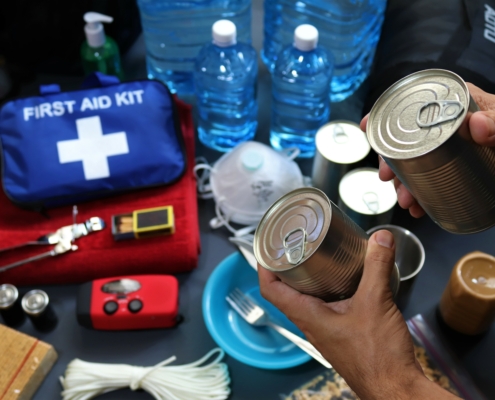
At a glance, federal guidance from Ready.gov and the American Red Cross consistently recommend keeping, at least, the following essentials on hand:
- Water
- Nonperishable food
- Extra batteries
- Battery-powered or hand-crank radio
- Backup phone charging method
- First-aid kit and prescription medications
- Cash in small denominations (if able)
- Copies of important documents
- Basic sanitation supplies
If you already have these items, the next step is making sure they are up to date and in working order.
Water
FEMA recommends keeping at least one gallon of water per person per day for at least three days, and Regional Water Providers Consortium advises to keep enough for up to 14 days. Stored water doesn’t last forever, and if you are storing commercially bottled water, check expiration dates and rotate as needed. If you are storing tap water yourself, the CDC advises replacing it every six months and using food-grade containers. To ensure you always have drinkable water in the event of an emergency, set a recurring calendar alert every six months to inspect and refresh your water supply.
Nonperishable food
While sheltering in place, and to reduce the risk of being affected by disruptions in community food supplies, Foodsafety.gov recommends having at least a 3-day supply of nonperishable foods on hand. And though canned goods and packaged foods have long shelf lives, FEMA recommends checking “best by” dates annually to replace expired items as needed, rotating older items into regular household use, and re-purchasing your used item during your next grocery store visit.
Tip: Choose foods that require minimal preparation and little or no water, and that are not very salty or spicy (as these foods increase the need for drinking water), especially in case utilities are disrupted. Nevada’s Office of Emergency Management’s emergency kit guide offers examples of food to include in your ‘emergency pantry’ and tips on how to store food so it lasts.
Extra batteries
Flashlights, radios, smoke detectors, and backup medical devices are only as reliable as the batteries inside them. The American Red Cross recommends checking batteries regularly and keeping extras in your emergency kit.
Even unused batteries can lose charge over time. As a best practice:
- Test flashlights and radios twice a year.
- Replace aging batteries proactively.
- Store batteries in a cool, dry place.
Side note: Different types of batteries have different shelf lives, even when not in use. Check out this article for information on battery shelf lives, storage tips, and how to dispose of batteries responsibly.
Battery-powered or hand-crank radio
When power and internet service are disrupted, radio broadcasts often remain one of the most dependable ways to receive updates. NOAA Weather Radio provides continuous, official weather and hazard information directly from the National Weather Service. Ready.gov recommends having a battery-powered or hand-crank radio as part of your emergency supplies.
Many modern emergency radios include:
- Hand-crank charging
- Solar panels
- USB device charging ports
- Built-in flashlights
Test the radio periodically and confirm you can tune to your local NOAA frequency. And if you’re in the market for a new device, check out this Wirecutter Best Emergency Weather Radio article for their four top picks.
Backup phone charging method
Mobile phones are critical communication tools during emergencies, but they depend on power. Ready.gov encourages including backup power sources for phones in your emergency kit. Portable battery banks are helpful, but solar-powered charging banks provide an added layer of redundancy when outages last longer than expected.
Good practice includes:
- Fully charge backup power banks ahead of forecasted storms.
- Store charging cords with your kit so they are not misplaced.
- Anker suggests recharging stored battery banks every few months, as they gradually lose charge even when unused.
Wirecutter offers their 3 picks for Portable Chargers and Power Banks and, if your budget allows, HuffPost’s Best Portable Power Stations gives recommendations for slightly pricier power station options.
For people who use electricity and battery-dependent assistive technology and medical devices, the ADA National Network also provides this helpful power planning checklist to make power-backup plans.
First-aid kit and prescription medications
In an emergency, quick access to medications and first-aid supplies is equally as important as food or water! Injuries can happen during disasters, and medical care may be delayed if hospitals or emergency services are overwhelmed.
The CDC advises including one week’s supply of all prescription medications and medical supplies in your emergency kit. Be aware of expiration dates and refill prescriptions promptly so your backup supply remains current. If you rely on refrigerated medications or electrically powered medical devices, consider discussing backup options with your healthcare provider, such as portable coolers or battery backups.
You may also be wondering, “What if my medications are going to run out in the middle of an emergency, but I won’t have a refill available beforehand?” HealthcareReady.gov maintains a list of Emergency Prescription Refill Laws by State that specifies whether your state allows emergency refills and how many additional days of medication can be dispensed. You can also check directly with your state’s Board of Pharmacy to determine if this is allowed. The National Association of Boards of Pharmacy (NABP) maintains a directory of every state board and their contact information.
Additionally, the Administration for Strategic Preparedness Response (ASPR) notes that uninsured individuals may be able to obtain certain prescription medications and medical supplies through the Emergency Prescription Assistance Program (EPAP) during certain declared emergencies. Check out this ASPR page for more information on how EPAP works, what items are covered, finding an EPAP-enrolled pharmacy, and more.
Beyond medications, it’s important to review the contents of your basic first-aid kit at least once or twice a year. At minimum, the National Weather Service recommends including the following items:
- Adhesive bandages in multiple sizes
- Antiseptic wipes or solution
- Antibiotic ointment
If you’re able to include more, Mayo Clinic offers an in-depth list of other supplies you may need, but to generally include:
- Sterile gauze pads and medical tape
- Elastic bandage wraps
- Instant cold packs
- Non-prescription pain relievers
- Tweezers and small scissors
- Disposable gloves
- A digital thermometer
- A basic first-aid manual
Check supplies periodically to ensure sterile packaging remains sealed and medications have not expired. If you have children, older adults, pets, or household members with specific health needs, you may also want to customize your kit with items such as pediatric medications, mobility aids, spare eyeglasses, or hearing-aid batteries.
Tip: If someone in your household has a chronic condition or severe allergy, keep a written list of medications, dosages, allergies, and healthcare providers inside your kit. The CDC and Ready.gov both recommend including this information so responders can quickly understand a person’s medical needs if communication becomes difficult.
Cash in small denominations (if able)
In extended outages, ATMs and card readers may not function. Navy Federal Credit Union recommends keeping cash on hand, in small denominations, in your emergency kit. You don’t need large amounts, though! Even modest cash reserves can help with:
- Fuel
- Food
- Basic supplies
Store cash in a water or fireproof pouch and revisit it occasionally to ensure it remains secure and accessible. Yahoo offers their list of 10 Disaster-Proof Storage Options to help keep your funds safe.
Copies of important documents
Emergency supplies are not only physical items. Documentation matters. The Federal Deposit Insurance Corporation (FDIC) recommends keeping copies of insurance policies, identification, financial, and medical information in a waterproof, portable container.
Consider:
- Storing paper copies in a sealed plastic bag.
- Keeping encrypted digital copies on a secure cloud service or password-protected flash drive.
- Utilizing a safe deposit box at your bank for documents that are difficult or nearly impossible to replace, and that you don’t need to regularly access.
- Updating documents after major life changes.
Basic sanitation supplies
When disasters disrupt water systems, sewage infrastructure, or waste collection, maintaining basic hygiene becomes more difficult. However, good sanitation is essential for preventing illness with the spread of bacteria, particularly when households are sheltering in place or living in close quarters.
Different offices, such as the Louisiana Governor’s Office of Homeland Security and Emergency Preparedness, City of San Jose’s Fire Department, and City of Williamsburg Emergency Management, all provide their recommendations for the basic sanitation supplies households should keep on hand. These lists can feel overwhelming, but common sanitation supplies that are recommended over and over include:
- Moist towelettes or baby wipes
- Alcohol-based hand sanitizer
- Toilet paper
- Feminine hygiene products
- Garbage bags and plastic ties
- Household disinfecting wipes or spray
- Paper towels
It’s also recommended to keep supplies that allow safe waste disposal if plumbing systems are unavailable. Heavy-duty garbage bags, plastic buckets with lids, and household disinfectants can help households temporarily manage waste while maintaining sanitation.
If water service is disrupted, handwashing may also become more challenging. The CDC advises that alcohol-based hand sanitizer (with at least 60% alcohol) can serve as a temporary substitute when soap and clean water are not available, though proper handwashing remains the most effective method when water service is restored.
You may also want to store a small bottle of household bleach for disinfecting surfaces or treating water if public health authorities advise it during emergencies. The Washington State Department of Health provide guidance on safe dilution ratios for disinfecting and sanitation purposes.
Tip: Store sanitation supplies in a waterproof bin or sealed container within your emergency kit. Hygiene products can deteriorate if exposed to moisture, and having them organized makes it easier to access them quickly when needed.
Revisit Your Supplies Once or Twice a Year
Preparedness works best when it becomes routine, and FEMA encourages reviewing and refreshing emergency kits regularly. Many households find it helpful to:
- Check supplies at the start of hurricane, wildfire, or winter storm season. The National Centers for Environmental Information provides an article on U.S. Disasters in Seasonal Context.
- Pair preparedness checks with daylight saving time changes. This can mean setting a schedule to check your supplies around the second Sunday in March and the first Sunday in November.
- Replace expired items immediately rather than postponing.
A Final Reminder
Disasters vary and circumstances differ, but functioning supplies, reliable information access, and small practical safeguards benefit everyone. You don’t need to overhaul everything today, though! Start with one drawer, one shelf, or one reminder on your calendar. Replace the water. Test the batteries. Charge the backup bank. Put aside a little cash if you can. Small steps, taken consistently, help ensure that when the unexpected happens, you’re starting prepared.
The information provided in this piece is for your convenience and informational purposes only and not to be construed as professional advice. FEEA and its coauthors and sponsors are not liable for any losses or damages related to actions or failure to act with regard to the content in this piece.
SUBSCRIBE TO OUR NEWSLETTER
MORE FROM FEEA